Venezuela live updates: Maduro to appear in federal court - PYN ANIO

ShowBiz & Sports

Hot

Monday, January 5, 2026

Venezuela live updates: Maduro to appear in federal court

Venezuela live updates: Maduro to appear in federal court

PresidentDonald Trumphas called the case against former Venezuelan President Nicolás Maduro "infallible," as the toppled leader is expected Monday to make his first appearance in federal court.

Maduro is set toappear in a Manhattan federal courtat noon local time for arraignment on a four-count indictment accusing him of leading a 25-year narco-terrorism conspiracy. It will be Maduro's first court appearance after he and his wife, Cilia Flores, were captured over the weekend in an overnight United States military attack on Venezuela and whisked away to New York.

"There is no endgame. We're just going to go through a slog of a trial," Trump told reporters aboard Air Force One on Jan. 4. "We'll see how we do. The case is, it's infallible."

The toppled leader wasindicted on federal chargesof narco-terrorism conspiracy, cocaine importation conspiracy and two illegal weapons counts based on allegations he helped ship tons of cocaine to the United States over decades. He was charged along with his wife, son and top members of his administration.

The surprise attack marked a significant escalation against the South American country aftermonths of rising tensions, threats and oil tanker seizures. The military operation has drawn support from Trump's allies but also bipartisan criticism as some lawmakers have questioned the legality of an operation to seize the head of state of a foreign power.

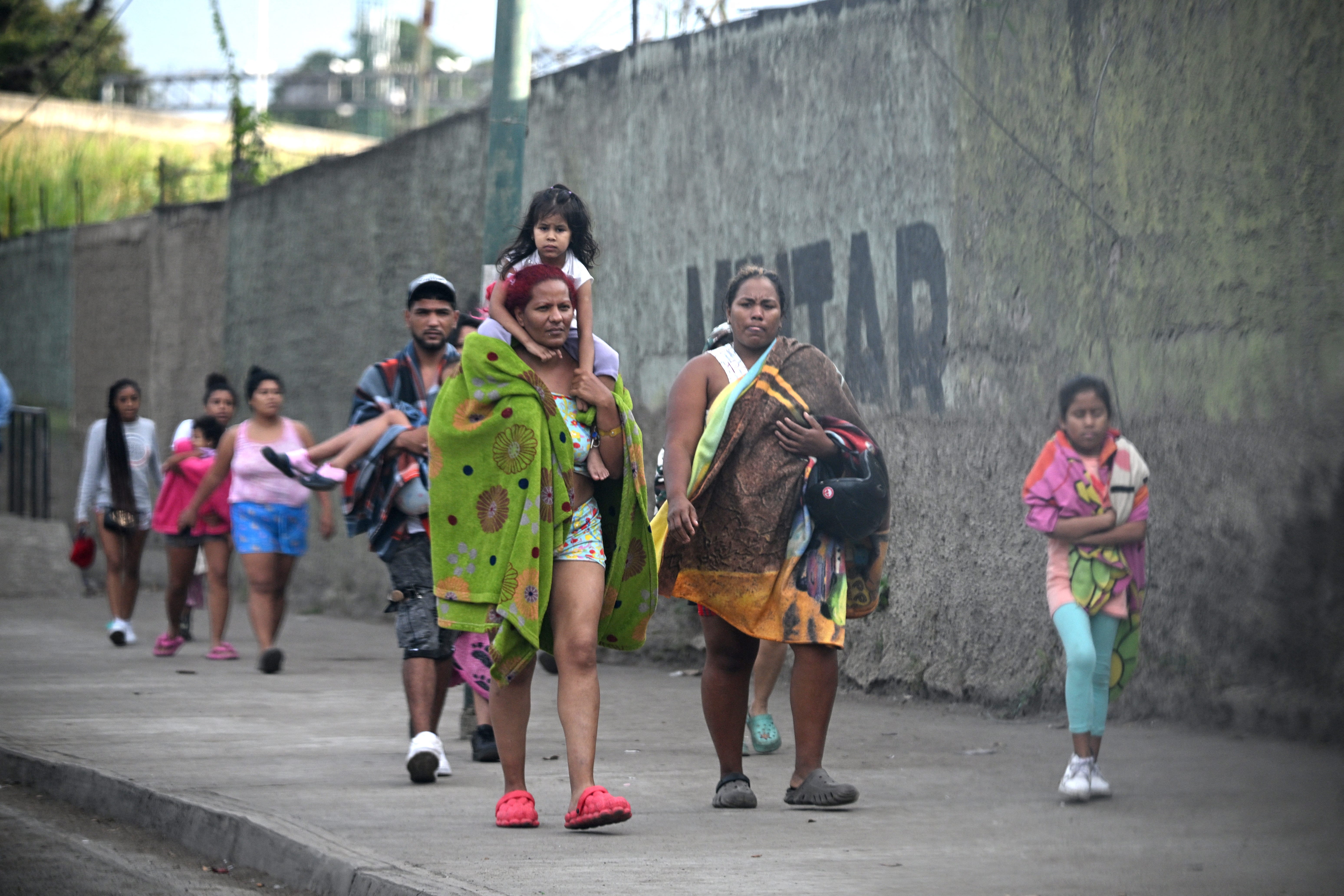
Employees stand near rubble and a dish antenna with holes after a U.S. airstrike destroyed a TV and telephone tower that collapsed onto transmission operator Carlos BrachoÕs home, killing a neighbor and injuring her daughter in the same attack, according to Bracho, in El Hatillo, on the outskirts of Caracas, Venezuela on Jan. 4, 2026. Motorcyclists queue at a petrol station to get fuel in Caracas on Jan. 3, 2026, after US forces captured Venezuelan leader Nicolas Maduro. President Donald Trump said on Jan. 3, 2026, that US forces had captured Venezuela's leader Nicolas Maduro after bombing the capital Caracas and other cities in a dramatic climax to a months-long standoff between Trump and his Venezuelan arch-foe. Jorge Cardona, along with his friend, looks for personal belongings through the rubble of a damaged building following U.S. strikes on Venezuela during which President Nicolas Maduro and his wife, Cilia Flores, were captured, in Catia La Mar, Venezuela on Jan. 4, 2026. A satellite image shows a closer view of destroyed vehicles and equipment at Fort Tiuna after the U.S. strikes, in Caracas, Venezuela on Jan. 3, 2026. A car drives by at the Tienditas Bridge border between Venezuela and Colombia, after the U.S. struck Venezuela and captured its President Nicolas Maduro, in Cucuta, Colombia on Jan. 4, 2026. A destroyed missile interceptor vehicle is seen at La Carlota air base in Caracas on Jan. 3, 2026, after US forces captured Venezuelan leader Nicolas Maduro after launching a Jesus Linares, 48, stands next to a local resident as he looks at his damaged apartment building, after the U.S. launched a strike on Venezuela, capturing its President Nicolas Maduro and his wife Cilia Flores, in Catia La Mar, Venezuela on Jan. 4, 2026. A woman walks past a mural depicting Venezuela's Liberator Simon Bolivar with the Venezuelan national flag and reading A man sits between street lanes, after the U.S. launched a strike on Venezuela, capturing its President Nicolas Maduro and his wife Cilia Flores, in Caracas, Venezuela on Jan. 4, 2026. Windows of a residential building are cracked, after the U.S. launched a strike on Venezuela, capturing its President Nicolas Maduro and his wife Cilia Flores, in Caracas, Venezuela on Jan. 4, 2026. A woman holds a fragment of a rocket, after the U.S. launched a strike on Venezuela, capturing its President Nicolas Maduro and his wife Cilia Flores, in Caracas, Venezuela on Jan. 4, 2026. Jesus Linares, 48, stands at his damaged apartment, after the U.S. launched a strike on Venezuela, capturing its President Nicolas Maduro and his wife Cilia Flores, in Catia La Mar, Venezuela on Jan. 4, 2026. People queue to buy gasoline at a gas station in Caracas, on Jan. 4, 2026, a day after Venezuela's president Nicolas Maduro was captured in a US strike. A lingering smell of explosives hung over Venezuela's capital Caracas on Saturday as shocked residents took stock after an early-morning US strike that ousted strongman Nicolas Maduro. Erika Utera, sister of transmission operator Carlos Bracho, hugs a family member by the rubble after a U.S. airstrike destroyed a TV and telephone tower that collapsed onto her home, killing a neighbor and injuring her daughter in the same attack, according to Bracho, in El Hatillo, on the outskirts of Caracas, Venezuela on Jan. 4, 2026. People charge their phones, as several neighborhoods remain without electricity after the U.S. launched a strike on Venezuela, capturing its President Nicolas Maduro and his wife Cilia Flores, in Caracas, Venezuela on Jan. 4, 2026. Employees stand near rubble after a U.S. airstrike destroyed a TV and telephone tower that collapsed onto Carlos Bracho home, killing a neighbor and injuring her daughter in the same attack, according to Bracho, in El Hatillo, on the outskirts of Caracas, Venezuela on Jan. 4, 2026. Men carry furniture as they help clean a damaged apartment in Catia La Mar, La Guaira State, Venezuela, on Jan. 4, 2026, a day after Venezuela's leader Nicolas Maduro was captured in a US strike. Venezuela's military on Sunday recognized Delcy Rodriguez, deputy to ousted president Nicolas Maduro, as the country's acting leader, after US forces extracted the former head of state to face trial. Men carry furniture as they help clean a damaged apartment in Catia La Mar, La Guaira State, Venezuela, on Jan. 4, 2026, a day after Venezuela's leader Nicolas Maduro was captured in a US strike. Venezuela's military on Sunday recognized Delcy Rodriguez, deputy to ousted president Nicolas Maduro, as the country's acting leader, after US forces extracted the former head of state to face trial. A motorcycle rides along an empty street in Caracas on Jan. 3, 2026, after US forces captured Venezuelan leader Nicolas Maduro. President Donald Trump said Saturday that US forces had captured Venezuela's leader Nicolas Maduro after bombing the capital Caracas and other cities in a dramatic climax to a months-long standoff between Trump and his Venezuelan arch-foe.

See aftermath of US raid on Venezuela to capture Maduro

Developments:

∎ Trump, speaking on Air Force One, mused about other countries on Sunday, saying Mexico needs to "get its act together," telling reporters that military action in Colombia sounds "good." Trump also reiterated his claims that the U.S. "needs Greenland" and said the Cuban regime is "ready to fall."

∎ Cuban state media reported that 32 Cuban nationals providing security for Maduro were killed in the surprise U.S. attack over the weekend. Neither the U.S. nor Venezuela has confirmed the death toll, but American officials said several soldiers were injured in the operation.

∎ While Trump says the U.S. will "run" Venezuela, Secretary of StateMarco Rubiohas said focus remains on using leverage and pressure to force the oil-rich country to act in line with American interests. So far, there's been more questions than answers about how Venezuela will be governed after Maduro's capture.

Venezuela's Vice President Delcy Rodríguez adopts softer tone

While speaking to reporters on Sunday night, Trump reiterated that the U.S. is "in charge" of Venezuela. The president added that his administration is "dealing with the people that just got sworn in," in an apparent reference toVenezuela's Vice President Delcy Rodríguez, who has been named as acting president.

Trump told reporters that he has not spoken to Rodríguez yet, but others have, adding that he will speak to her "at the right time." He later said the U.S. did not give anything to Rodríguez in exchange for cooperating but noted "she's cooperating."

Lebanon's Foreign Minister Gebran Bassil is greeted by Venezuelan Foreign Minister Delcy Rodriguez during their meeting in Caracas Feb. 27, 2015. Venezuelan Foreign Minister Delcy Rodriguez speaks to the media during a news conference in Caracas March 25, 2015. Venezuela's socialist government said on Wednesday it has collected more than three million signatures asking U.S. President Barack Obama to repeal measures declaring the South American country a security threat. Russian Foreign Minister Sergei Lavrov shows the way to his Venezuelan counterpart Delcy Rodriguez during a meeting in Moscow, Russia, May 27, 2015. Kazakh Foreign Minister Yerlan Idrisov (R) shakes hands with his Venezuelan counterpart Delcy Rodriguez during their meeting in Astana on Jan. 16, 2015. Venezuela's Minister of Foreign Affairs Delcy Rodr'guez (R) speaks during a press conference following a meeting with US Charge d'Affairs to Venezuela Lee McClenny in Caracas on March 2, 2015. Venezuela granted the United States 15 days to submit a plan to reduce the number of staff at its embassy in Caracas, Rodriguez announced. Venezuelan Foreign Minister Delcy Rodriguez speaks during a news conference on the sidelines of the Organization of American States (OAS) 47th General Assembly in Cancun, Mexico on June 20, 2017. (L to R) Members of the Constituent Assembly Cilia Flores, Delcy Rodriguez, Diosdado Cabello and Aristobulo Isturiz pose with a picture of late Venezuelan President Hugo Chavez during the Assembly's installation at the National Congress in Caracas on Aug. 4, 2017. Venezuelan President Nicolas Maduro installed a powerful new assembly packed with his allies, dismissing an international outcry and opposition protests saying he is burying democracy in his crisis-hit country. Venezuelan President Nicolas Maduro (C) his wife Cilia Flores (R) and Constituent Assembly president Delcy Rodriguez arrive at the Congress in Caracas for the Presidential inauguration ceremony, on May 24, 2018. Venezuela's President Nicolas Maduro, next to Venezuelan Vice-president Delcy Rodriguez signs at a balcony at Miraflores Presidential Palace, a document through which his government breaks off diplomatic ties with the United States, during a gathering in Caracas on Jan. 23, 2019. Venezuela President Nicolas Maduro announced on Wednesday he was breaking off diplomatic ties with the United States after counterpart Donald Trump acknowledged opposition leader Juan Guaido as the South American country's Vice President of Venezuela Delcy Rodriguez raises her fist as she arrives to address the United Nations General Assembly at UN headquarters on Sept. 27, 2019 in New York City. World leaders from across the globe are gathered at the 74th session of the UN General Assembly, amid crises ranging from climate change to possible conflict between Iran and the United States. Vice President of Venezuela Delcy Rodriguez exits the stage after addressing the United Nations General Assembly at UN headquarters on Sept. 27, 2019 in New York City. World leaders from across the globe are gathered at the 74th session of the UN General Assembly, amid crises ranging from climate change to possible conflict between Iran and the United States. Venezuela's Vice President Delcy Rodriguez speaks during the Antifascist Global Parliamentary Forum in Caracas on Nov. 5, 2024. Venezuela's President Nicolas Maduro (2nd R) waves next to First Lady Cilia Flores, Vice President Delcy Rodriguez (L) and the president of the National Assembly Jorge Rodriguez on arrival at the Capitolio -house of the National Assembly- for the presidential inauguration, in Caracas on Jan. 10, 2025. Maduro, in power since 2013, will take the oath of office for a third term despite a global outcry that brought thousands out in protest on the ceremony's eve. Venezuela's Vice President Delcy Rodriguez speaks during a press conference in Caracas on Sept. 8, 2025. Venezuela called the drug trafficking accusations made by the United States against Venezuelan President Nicolas Maduro a Venezuela's Vice President Delcy Rodriguez speaks past portraits of late Venezuelan President Hugo Chavez and the liberator Simon Bolivar during the presentation of the 2026 fiscal year budget at the National Congress in Caracas on Dec. 4, 2025. The Venezuelan government presented its budget for 2026 on December 4, 2025, which, calculated in dollars, is 12% less than the budget approved for 2025, while denouncing Venezuela's President Nicolas Maduro, flanked by his wife Cilia Flores and National Constituent Assembly President Delcy Rodriguez, arrives for a special session of the National Constituent Assembly to take oath as re-elected President at the Palacio Federal Legislativo in Caracas, Venezuela May 24, 2018.

Venezuela's VP Delcy Rodriguez takes over after Maduro capture

Rodríguez previously rejected Trump's claims that she was willing to work with his administration, but adopted a softer tone in a statement on Sunday night. She called for a "balanced and respectful" relationship with the United States, adding that relations between the two countries should be based on "sovereign equality and non-interference."

"We invite the U.S. government to collaborate with us on an agenda of cooperation oriented towards shared development within the framework of international law to strengthen lasting community coexistence," Rodríguez said ina statement on Telegram.

Earlier that day, Trump had issued a warning against Rodríguez. "If she doesn't do what's right, she is going to pay a very big price, probably bigger than Maduro," Trump toldThe Atlantic.

Trump says US needs 'total access' to Venezuela's resources

When asked if he would demand free and fair elections in Venezuela, Trump said, "it depends." Before elections can take place in the country, he said Venezuela needs to be "fixed."

"We're looking more at getting it fixed, getting it ready first, because it's a mess. The country is a mess," he said.

Trump also called on Rodríguez to provide the United States with "total access" to Venezuela's resources. He noted that oil companies wanted to enter Venezuela and repair the country's oil infrastructure.

Venezuela is recognized as havingthe world's largest proven crude oil reserves, according to the U.S. Energy Information Administration. Trump has said U.S. oil companies could start investing again in the region, a practice halted when Maduro's predecessor, the late Hugo Chavez, expropriated the assets of foreign oil companies.

Trump threatens Colombia, says Cuba may fall on its own

In his comments on board Air Force One, Trump called Venezuela "very sick" and said the U.S. might launch a second military strike on the country if remaining members of Maduro's administration do not cooperate with his efforts to get the country "fixed."

His comments also raised the possibility of further U.S. military interventions in Latin America. Trump suggested that Colombia and Mexico could also face military action if they do not reduce the flow of illicit drugs to the U.S.

"Colombia is very sick, too, run by a sick man, who likes making cocaine and selling it to the United States, and he's not going to be doing it very long," Trump told reporters aboard Air Force One, in an apparent reference to Colombia's president Gustavo Petro.

He also said that Cuba, a close ally of Venezuela, "looks like it's ready to fall" on its own without U.S. military action. According to Trump, "a lot of Cubans were killed" during the operation to capture Maduro on Saturday.

Venezuela's Defense Minister General Vladimir Padrino said on state television the U.S. attack killed soldiers, civilians and a "large part" of Maduro's security detail "in cold blood." The Cuban government said 32 of its citizens were killed during the raid.

Venezuelan houses destroyed in US attack

Some homes in the town of Catia La Mar near Venezuela's capital Caracas were damaged or destroyed in the U.S. military operation, residents told Reuters on Jan. 4.

Jonatan Mallora, a 50-year-old motorcycle taxi driver, and his neighbor Angel Alvarez, a young street vendor, said they woke on Jan. 3 to explosions in their community in La Guaira state, about 19 miles north of Caracas.

"It's sheer luck they didn't kill my kids," Mallora said amid the rubble of his apartment, where the roof was destroyed. He said he fled and escaped unharmed along with his 24-year-old daughter and 22-year-old son.

"I would never wish on anyone" the experience of an attack, he added. "We're alive by a miracle."

Venezuelan authorities have said the U.S. hit areas in La Guaira, Caracas and the neighboring states of Miranda and Aragua and that soldiers, civilians and much of Maduro's security team were killed, though they have not offered specific figures on dead and injured.

A still image from video posted by the White House's Rapid Response 47 account on X.com, which originated from the @PaulDMauro account, shows Venezuela's President Nicolas Maduro being walked in custody down a hallway at the offices of the U.S. Drug Enforcement Administration (DEA) in New York City on Jan. 3, 2026. <p style=Venezuelan leader Nicolás Maduro, pictured here after his capture aboard the USS Iwo Jima, is seen in this handout image posted by U.S. President Donald Trump on Truth Social Jan. 3, 2026. The United States captured Venezuelan leader Nicolás Maduro and his wife in an overnight military operation on Jan. 3, 2026, President Donald Trump said, as explosions rocked Caracas and targets across the country.

" style="max-width:100%; height:auto; border-radius:6px; margin:10px 0;" loading="lazy" /> Picture of fire at Fuerte Tiuna, Venezuela's largest military complex, after a series of explosions in Caracas on January 3, 2026. Loud explosions, accompanied by sounds resembling aircraft flyovers, were heard in Caracas around 2:00 am on January 3. Venezuela's President Nicolas Maduro is led in custody from a U.S. federal airplane before his scheduled court appearance at Manhattan federal court, at Stewart Air National Guard Base in Newburgh, New York, U.S. January 3, 2026. A photograph posted by U.S. President Donald Trump on his Truth Social account shows him sitting next to U.S. Secretary of State Marco Rubio as they watch the U.S. military operation in Venezuela from Trump's Mar a Lago resort, in Palm Beach, Florida, January 3, 2026. Fire at Fuerte Tiuna, Venezuela's largest military complex, is seen from a distance after a series of explosions in Caracas on January 3, 2026. Picture showing damages to a building in the port of La Guaira, Venezuela, after a US military operation that led to the capture of President Nicolas Maduro, on January 3, 2026. Smoke rises from explosions in Caracas, Venezuela, January 3, 2026, in this screen grab obtained from video obtained by Reuters. Helicopters fly past plumes of smoke rising from explosions, in Caracas, Venezuela, January 3, 2026 in this screen grab obtained from video obtained by Reuters. A military personnel member walks past debris at La Carlota military air base, after U.S. President Donald Trump said the U.S. has struck Venezuela and captured its President Nicolas Maduro, in Caracas, Venezuela, Jan. 3, 2026. Civilians who were living inside Fuerte Tiuna, Venezuela's largest military complex leave the compound, in Caracas on Jan. 3, 2026. A column of smoke rises during multiple explosions in the early hours of the morning, in Caracas, Venezuela, January 3, 2026 in this screen grab obtained from video obtained by Reuters. A destroyed anti-aircraft unit at La Carlota military air base, after U.S. President Donald Trump said the U.S. has struck Venezuela and captured its President Nicolas Maduro, in Caracas, Venezuela, Jan. 3, 2026. A firefighter walks past a destroyed anti-aircraft unit at La Carlota military air base, after U.S. President Donald Trump said the U.S. has struck Venezuela and captured its President Nicolas Maduro, in Caracas, Venezuela, January 3, 2026. Destroyed vehicles at La Carlota military air base, after U.S. President Donald Trump said the U.S. has struck Venezuela and captured its President Nicolas Maduro, in Caracas, Venezuela, January 3, 2026. A member of the National Guard stands guard at Fuerte Tiuna, Venezuela's largest military complex, in Caracas on Jan. 3, 2026, after U.S. forces captured Venezuelan leader Nicolas Maduro after launching a A Colombian soldier stands guard at the border between Venezuela and Colombia, after U.S. President Donald Trump said the U.S. has struck Venezuela and captured its President Nicolas Maduro, in Cucuta, Colombia, January 3, 2026. Colombian police and military personnel stand guard at the border between Venezuela and Colombia, after U.S. President Donald Trump said the U.S. has struck Venezuela and captured its President Nicolas Maduro, in Cucuta, Colombia, January 3, 2026. A destroyed anti-aircraft unit at La Carlota military air base, after U.S. President Donald Trump said the U.S. has struck Venezuela and captured its President Nicolas Maduro, in Caracas, Venezuela, January 3, 2026. A man walks next to military vehicles as Colombian soldiers patrol the border between Venezuela and Colombia, after U.S. President Donald Trump said the U.S. has struck Venezuela and captured its President Nicolas Maduro, in Cucuta, Colombia, January 3, 2026. Passengers sleep on the floor, after flights were delayed and cancelled when the airspace was closed due to U.S. strikes on Venezuela overnight, at Rafael Hernandez International Airport in Aguadilla, Puerto Rico January 3, 2026. U.S. Air Force F-22 Raptor fighter jets sit parked on the tarmac at the former Roosevelt Roads naval base, after U.S. President Donald Trump said the U.S. has struck Venezuela and captured its President Nicolas Maduro and his wife Cilia Flores, in Ceiba, Puerto Rico, January 3, 2026. Colombian soldiers in a military vehicle at the border between Venezuela and Colombia, after U.S. President Donald Trump said the U.S. has struck Venezuela and captured its President Nicolas Maduro, in Cucuta, Colombia, January 3, 2026. A car drives on an empty street, after U.S. President Donald Trump said the U.S. has struck Venezuela and captured its President Nicolas Maduro, in Caracas, Venezuela January 3, 2026. A cyclist stops to check their phone, after U.S. President Donald Trump said the U.S. has struck Venezuela and captured its President Nicolas Maduro, in Caracas, Venezuela January 3, 2026. F-22, C-130 and F-35 aircraft are seen at the former Roosevelt Roads naval base, after U.S. President Donald Trump said on Saturday the U.S. has struck Venezuela and captured its President Nicolas Maduro, in Ceiba, Puerto Rico, January 3, 2026. A supporter of Venezuelan President Nicolas Maduro holds a flag of Venezuela on an empty street near Miraflores Palace, after U.S. President Donald Trump said the U.S. has struck Venezuela and captured President Maduro, in Caracas, Venezuela, January 3, 2026. A person wears a Venezuelan flag, as they and others react to the news after U.S. President Donald Trump said the U.S. has struck Venezuela and captured its President Nicolas Maduro, in Miami, Florida, U.S., January 3, 2026. People react to the news after U.S. President Donald Trump said the U.S. has struck Venezuela and captured its President Nicolas Maduro, on the streets of Miami, Florida, U.S., January 3, 2026. A person wearing a hat that reads A man holds a flag reading A photograph posted by U.S. President Donald Trump on his Truth Social account shows him sitting next to CIA Director John Ratcliffe as they watch the U.S. military operation in Venezuela, January 3, 2026. Armed supporters of Venezuelan President Nicolas Maduro block the entrace to the 23 de enero neighborhood in Caracas on January 3, 2026, after US forces captured him. Picture showing damages to the port of La Guaira, Venezuela, after a US military operation that led to the capture of President Nicolas Maduro, on January 3, 2026. An armed supporter of Venezuelan President Nicolas Maduro blocks the entrace to the 23 de enero neighborhood in Caracas on January 3, 2026, after US forces captured him. Venezuela's Attorney General Tarek William Saab, raises his clenched fist as he leaves the vice-presidency building in Caracas on January 3, 2026, after US forces captured Venezuela's President Nicolas Maduro. The airplane carrying Venezuelan President Nicolas Madura lands at Stewart Air National Guard Base in Newburgh, N.Y. at approximately 4:30pm Jan. 3, 2026. A motorcade carrying ousted Venezuelan president Nicolas Maduro leaves the Westside Heliport in New York on January 3, 2026. Venezuelan President Nicolas Maduro arrived Saturday evening at a military base in the United States after his capture by US forces in Caracas. Maduro was seen surrounded by FBI agents as he descended the boarding stairs of a US government plane at a New York state National Guard facility, and was slowly escorted along the tarmac. A helicopter carrying ousted Venezuelan president Nicolas Maduro comes in to land at the Westside Heliport in New York on January 3, 2026. Venezuelan President Nicolas Maduro arrived Saturday evening at a military base in the United States after his capture by US forces in Caracas. Maduro was seen surrounded by FBI agents as he descended the boarding stairs of a US government plane at a New York state National Guard facility, and was slowly escorted along the tarmac.

US bombs targets in Venezuela and captures Nicolás Maduro

What's next in Venezuela?

The Trump administration'scapture of Madurobore some familiar echoes to the 1989 U.S. invasion of Panama that ousted military strongman Manuel Noriega, marking the most direct U.S. intervention in Latin America since.

But experts say that despite some similarities, the two key moments in America's long and checkered history of interventions differ in major ways that could make achieving U.S. goals more challenging this time, following a raid that has revived regional anxiety.

"This is not going to be so simple in Venezuela," said Will Freeman, a Latin America fellow at the Council on Foreign Relations. "One, it's not even likely that we get to democracy. And two, many of the problems that were there with Maduro are going to remain."Read more here.

− Chris Kenning

Rubio, who dreamed of ousting Venezuela's Maduro, takes charge

The capture of Maduro and his wife during a nighttime raid by U.S. troops on his compound in Caracas marked the realization of a longtime political goal for Trump. But it was a personal victory for a key member of Trump's administration: Secretary of StateMarco Rubio.

"Nicolás Maduro had multiple opportunities to avoid this," Rubio said, standing alongside Trump at a post-raid news conference at Trump's Mar-a-Lago estate in Florida. "He was provided multiple, very, very, very generous offers, and chose instead to act like a wild man, chose to play around. And the result is what we saw tonight."

Rubio, the son of Cuban immigrants, has been one of the primary architects of the Trump administration's Venezuela policy, which shifted the United States away from decades-long diplomatic negotiations on human rights and other issues to the use of military force to remove a de facto leader from office.Read more here.

− Francesca Chambers and Michael Collins

Contributing: Reuters

This article originally appeared on USA TODAY:Maduro to appear in court after capture: Live updates